The Salt March
The empire taxed the one substance every human being needs — so one man walked to the sea, bent down, and picked the grievance of 300 million up off the sand.
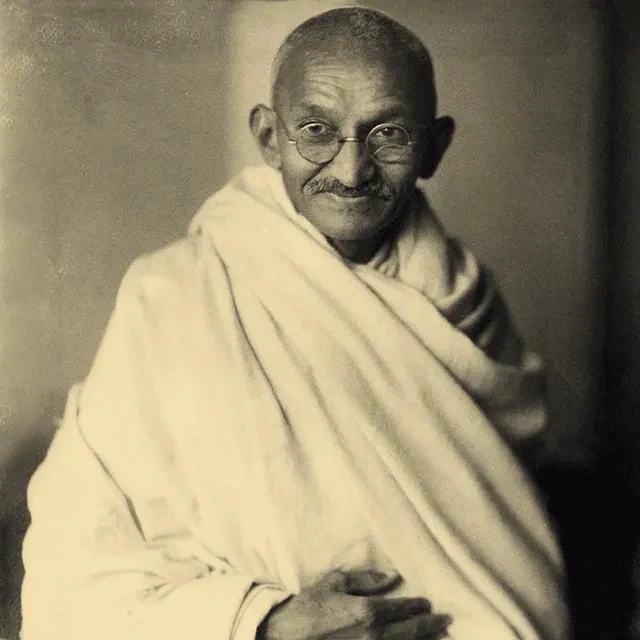
The choice of salt
Ask the strategic question first, because the strategy is the miracle here. A vast and divided country — hill and coast, rich and poor, Hindu and Muslim, a hundred grievances that each belong to somebody else. And the empire, helpfully, had taxed salt: the one substance no human being can live without, and made it a crime to boil your own from the sea that touches your own village. Gandhi reached past every division in the country and put his finger on the one grievance that belonged to all of it at once.
Then the theatre, which was also exact: no army, no manifesto — an old man in a loincloth with a wooden staff, walking out of the ashram on 12 March 1930, doing 240 miles in 24 days so that every village on the route and every newspaper on earth has time to understand precisely what is about to happen. At Dandi he bends down and breaks the law of the British Empire with his fingers.
The episode — The Salt MarchWhat it cost, and what it bought
Within weeks the gesture repeats on every coast. Civil disobedience erupts from one end of India to the other; tens of thousands go to jail, Nehru among them; women step into the front rank in numbers the movement has never seen. And day after day the world’s newspapers carry the same impossible image — the greatest empire on earth arresting an unarmed old man for the crime of picking up salt — until the empire looks exactly as small as it was.
The political ledger, honestly kept: the moral victory was total, and the political one could still be denied for a while — the year of irons, the handshake, the truce that followed are their own episodes. But he had not fired a shot or won a vote. He had simply found the one thing everyone shared, walked to the sea, and bent down.
What followed — The TruceWhere this thread runs
The march, dated
- 12 Mar 1930Sets out from the ashram with a wooden staff.
- Apr 1930Dandi: the handful of salt; arrests begin — S4 · E1.
- 1930The country in irons: tens of thousands jailed, women at the front — S4 · E2.
- 5 Mar 1931The Gandhi–Irwin pact: 90,000 freed; salt for the village — S4 · E4.
- 23 Mar 1931Eighteen days after the handshake, three young men hang — S4 · E5.
Named sources
- The episode record, The Salt March (S4 · E1) — dates, distances, the Dandi act, the world press.
- The episode records, The Country in Irons and The Truce (S4 · E2, E4) — the aftermath ledger.
- Primary and period sources, named in full on each episode’s own source list.
House rule: numbers arrive with their author’s name attached, and we correct in public. The method is on the About page →