By the start of 1931 the country is being crushed from two directions at once, and only one of them wears a uniform. The other is a falling number on an exchange floor an ocean away. The Great Depression has reached India, and the price of everything a farmer grows has collapsed — the agricultural index sliding from two hundred and three to one hundred and twenty-seven in two years, wheat and jute more than halved. And the one figure that does not fall, that the Crown will not let fall, is the land revenue. The income vanishes; the tax stays exactly where it was.
So the peasant does the last thing he has left to do. He sells the gold — the wife's bangles, the daughter's dowry, the only wealth a poor family ever holds — to pay a tax on land that no longer feeds him. Roughly sixteen hundred ounces a day flow into the port of Bombay and out to London, the British economy quietly propped up on the melted-down savings of the Indian poor. It is the same knife the founders saw in 1876 — a fixed demand on a people who cannot save — only now a global crash is twisting it.
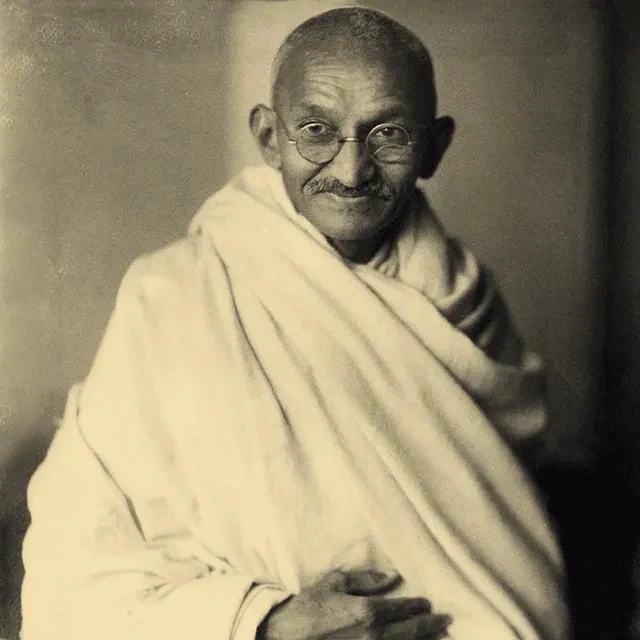
Into this, on the fifth of March 1931, comes a handshake. After a year of mass jailing, Gandhi and the Viceroy, Lord Irwin, sign a truce. Around ninety thousand prisoners walk free. The villagers by the sea may make their own salt again, for their own pots. The confiscated property is restored; the resigned officials may return; and in exchange Congress agrees to call off civil disobedience and sail to London for the Round Table.
Some saw an empire forced, at last, to bargain as an equal with a half-naked fakir. Others saw a truce that changed the mood but not the machine.
Because look at what was quietly kept. The salt tax itself was not repealed. The fixed revenue still drained the starving countryside. And a category of men — the ones who had taken up the gun — were left, deliberately, outside the amnesty, still in their cells, waiting. The pact freed ninety thousand. It was written so that it could not free them.
A handshake is a beautiful thing to photograph, and a hard thing to eat. The mood of the country lifted in March of 1931. The machine that was draining it did not move an inch — and eighteen days later it would remind everyone, with a rope, exactly who was still in charge.