One act, one man, five minutes. Each of these is a single scene lifted out of the century — complete in itself, and a door into the full episode.
J.C. Bose · 1885–88 · from Season Two
The Salary He Refused
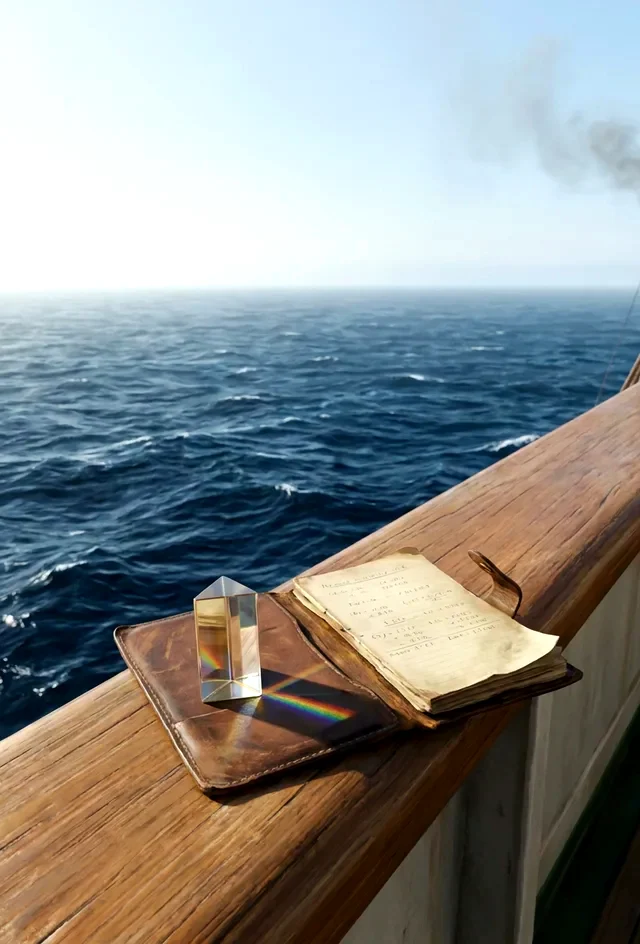
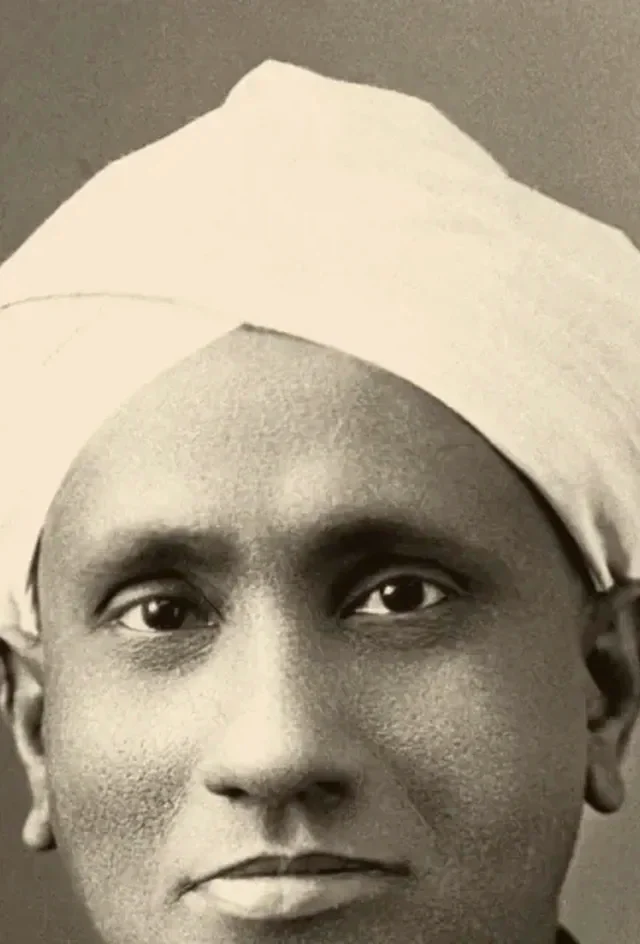
Bose comes home from Cambridge with three good degrees and takes the physics chair at Presidency College, and the government works out what to pay him: a third of an Englishman’s wage for the same chair, the same work. The logic is written in some office ledger — a native is a native.
So he does the strange thing. No letter to the papers. No hot resignation. He simply refuses to draw the money — for three years. He teaches, marks scripts, runs his classes, and at the end of every month declines the insult dressed as a wage. The house runs on Abala’s economy. In the end the College gives way — full pay, three years of arrears behind it. It’s the first thing you learn about the man and it tells you everything.
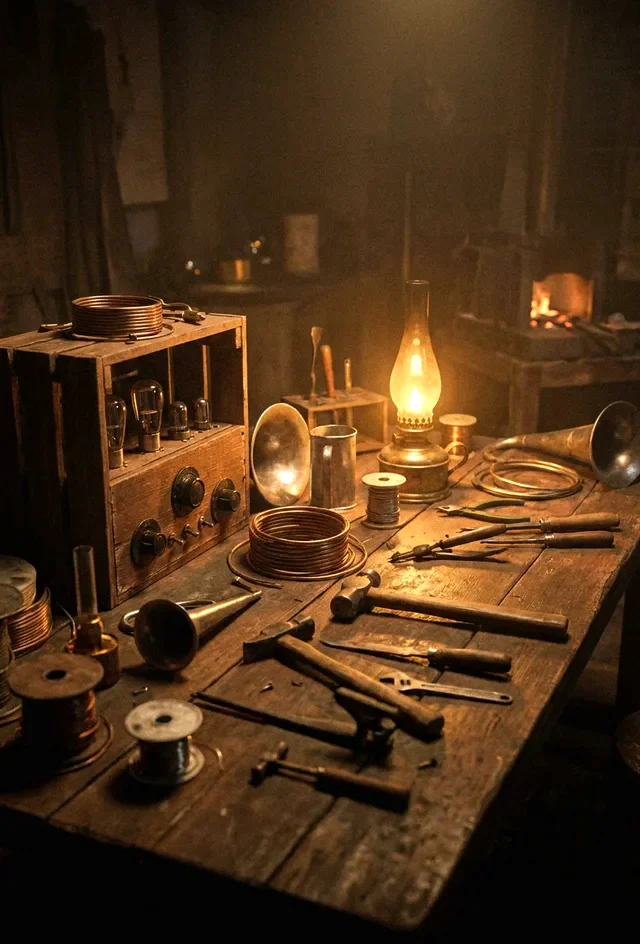
He wants to work on electric waves — the very short, invisible kind — and in England you’d write to a firm and the instruments would arrive in a crate. In Calcutta there is no firm. There is no instrument industry at all, because the whole country has been arranged to buy finished things and send back raw ones.
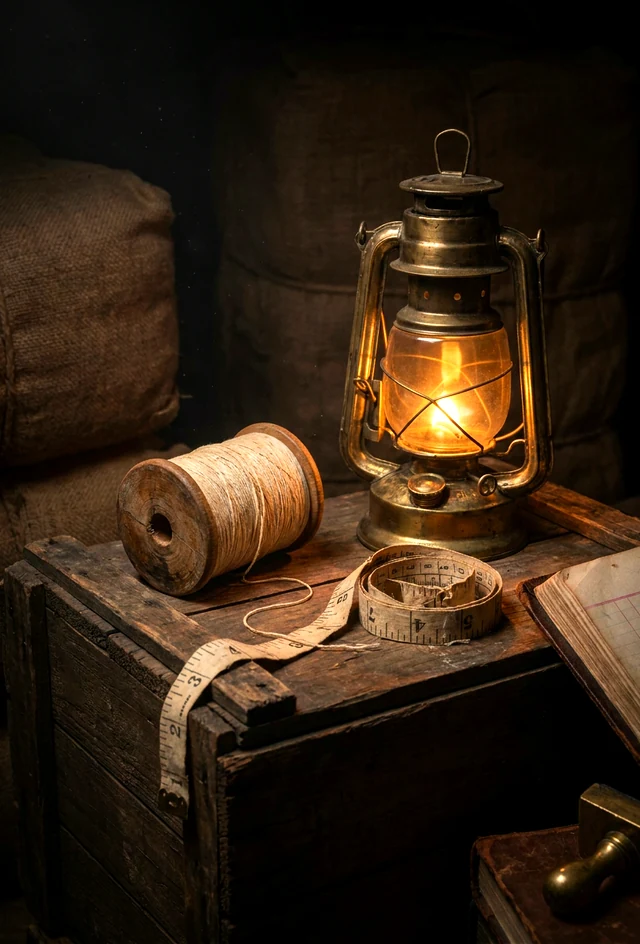
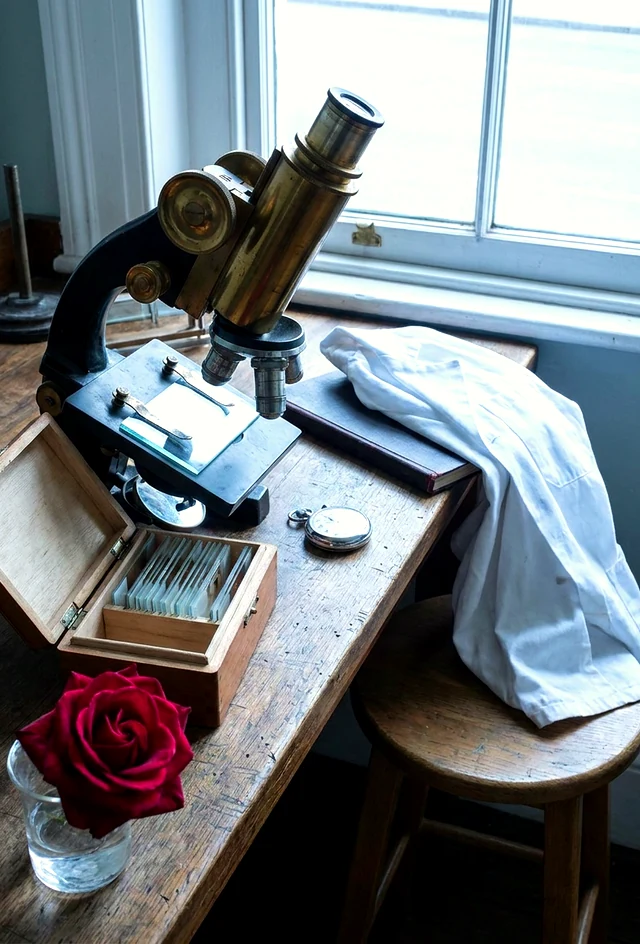
So Bose sits down with a local tinsmith — a man who has never made a scientific instrument in his life — and teaches him, and between the two of them they build the apparatus by hand, in the building, out of what can be had. The country won’t sell him tools, so he manufactures the tools, and then he manufactures the science. In 1896 he stands at the bench of the Royal Institution in London and makes invisible light bend, reflect, polarise — and the room that came to be impressed by a clever Indian leaves unsettled, because what it watched was a peer.
A wireless manufacturer understands what his detector is worth and comes for the rights. This is the moment a poorer man — a man with three years of unpaid salary behind him — takes the money and is set for life.
Bose files a single patent, pressed into it by an American friend, and then lets it lapse. He declines to own the airwaves. First man from the subcontinent with a U.S. patent, and he treats the whole apparatus of ownership as something faintly beneath the work. The knowledge belongs to everyone or it belongs to no one. He gives the future away on purpose. Think about what that costs a man who knows exactly what it’s worth.
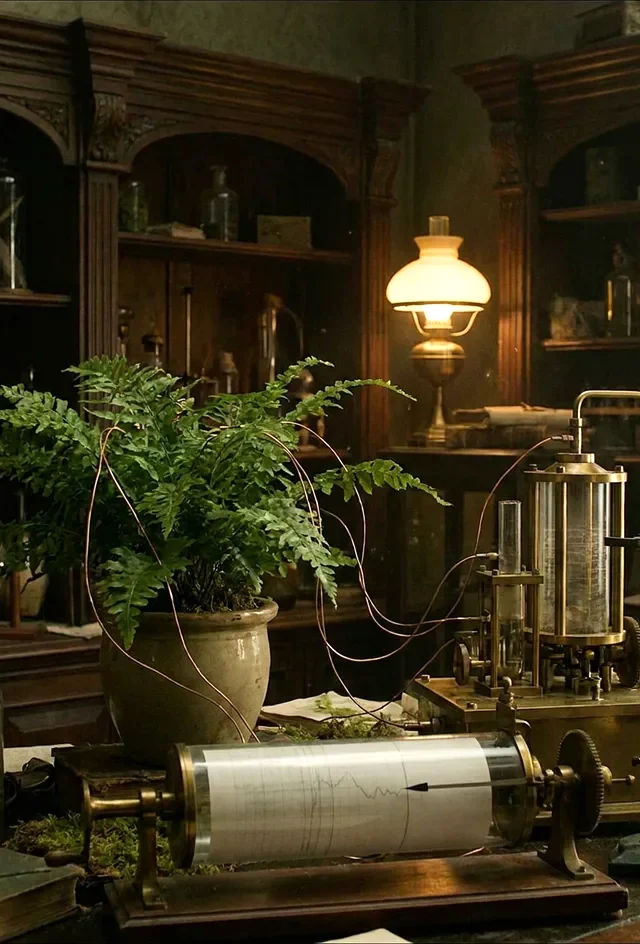
He turns from metal to life and goes looking for the line where physics stops and a living thing begins — and reports back that he cannot find it. He builds the Crescograph, an instrument that magnifies a plant’s movement ten thousand times, until you can watch a stem grow, flinch, tire, recover — watch a plant answer a shock the way your own nerve does.
He is taking the most patronised thing in the empire’s imagination — the silent, patient, exploitable Indian field — and showing the world it has been alive and feeling the whole time. You don’t have to be told what that is a parable of. He never says it. He doesn’t need to.
In the rooms Mahendralal Sircar built by public subscription in 1876 — no government money, “solely native, purely national” — a man who worked his experiments before and after a full day’s job finds out why the sea is blue.
It is the first new physics to carry an Indian’s name, made in India, on Indian instruments, in the farm’s own house. Fifty-two years after the gates opened, the crop comes in. Two years later Stockholm calls, and the bet a doctor made with his own pocket in 1876 pays off in front of the whole world.
Subhas Chandra Bose · January 1941 · from Season Six
The Visiting Card
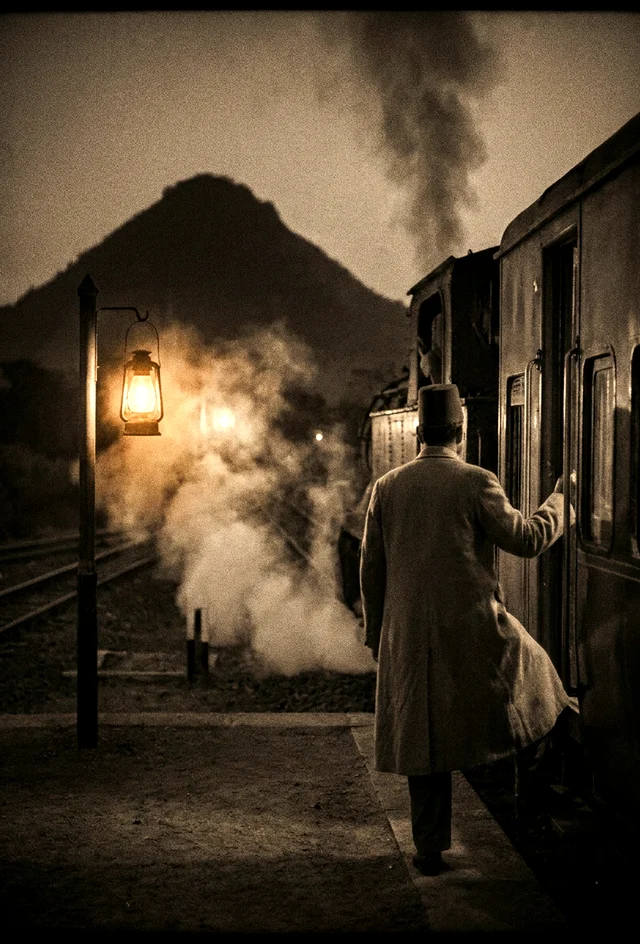
The disguise that beat the Raj’s entire watch apparatus was printed at a small shop on Radhabazar Street: Mohd. Ziauddin, Travelling Inspector, The Empire of India Life Assurance Co. Ltd., Civil Lines, Jubbulpore. A fez and pyjamas from Wachel Molla’s on Dharamtala completed the man who did not exist.
The card did its work twice — once past the sleeping CID men at the Elgin Road junction, and once at a Bararee bungalow where the fugitive presented himself, four hundred yards from his nephew’s door, as an insurance man seeking hospitality. The empire indexed a subcontinent; it could not index a fiction with a straight face and a printed card.
Dadabhai Naoroji · 1870–1913 · from Untold Stories
Loss, Loss, Loss
In 1870, with no statistics bureau anywhere in India, Naoroji computed the country’s income from the empire’s own blue-books: twenty rupees per head per year. The empire’s own later estimates landed within a few rupees of him. The argument about British rule had become arithmetic.
Forty-three years later, aged ninety, he answered a Viceroy’s official optimism about India’s booming trade statistics with the auditor’s final entry: India’s exports brought no gain to India — it was all loss, loss, loss.
The engineer’s 1937 plan promised to double a district’s income in ten years — from six crores to nine — through elected village councils and household workshops on the Japanese model. Every consultant since has promised the same and buried the risk in an appendix.
Visvesvaraya put his on the page in plain words: there may be some confusion and delay for the first two or three years. A plan that admits its bad years is a plan written by a man who has actually built something.
The Radcliffe line · August 1947 · from Untold Stories
The Unseen Award
The boundary that would move ten million people was ready on the thirteenth of August, 1947. It was shown to no one — the record is explicit: not even Lord Mountbatten — until the seventeenth, after both flags had gone up.
The ceremonies of freedom were deliberately insulated from the shock of the line. Bengal had claimed fifty-nine per cent of the province’s area; the award gave thirty-six. Both presses condemned it. Both governments accepted it. The coldest protocol of the entire transfer — and arguably the one that let the transfer happen at all.
One family, one instrument · 1895–1943 · a question the library keeps open
The Radio Bloodline
In 1895, in a Calcutta hall, Jagadish Chandra Bose sends an invisible wave across a room and rings a bell — before Marconi files a thing. In 1942, from Berlin, Azad Hind Radio carries another Bose’s voice into every wireless set the empire cannot switch off. And after the war, in America, a boy of the same lineage on the Builders’ Table turns the family instrument into a company the whole world knows by one name: Bose.
Three reaches for the same tool — reaching people you cannot see. The library marks the pattern and asks the question; the episodes hold the record.
The committee pattern · 1940–2009 · from the Builders’ Table
The Prize That Kept Skipping
1940: D.M. Bose and Bibha Chowdhuri photograph the tracks of the meson at the Bose Institute. Ten years later the photographic-emulsion technique wins a Nobel — for Powell. 1954: Narinder Singh Kapany bends light through glass fibre. In 2009 fibre optics wins the Nobel — for Kao.
Twice, the table’s work reached Stockholm carried by other hands. Not a grievance — a structural pattern, entered in the record as such, and one reason this library exists: so the ledger of who built what survives the committees.
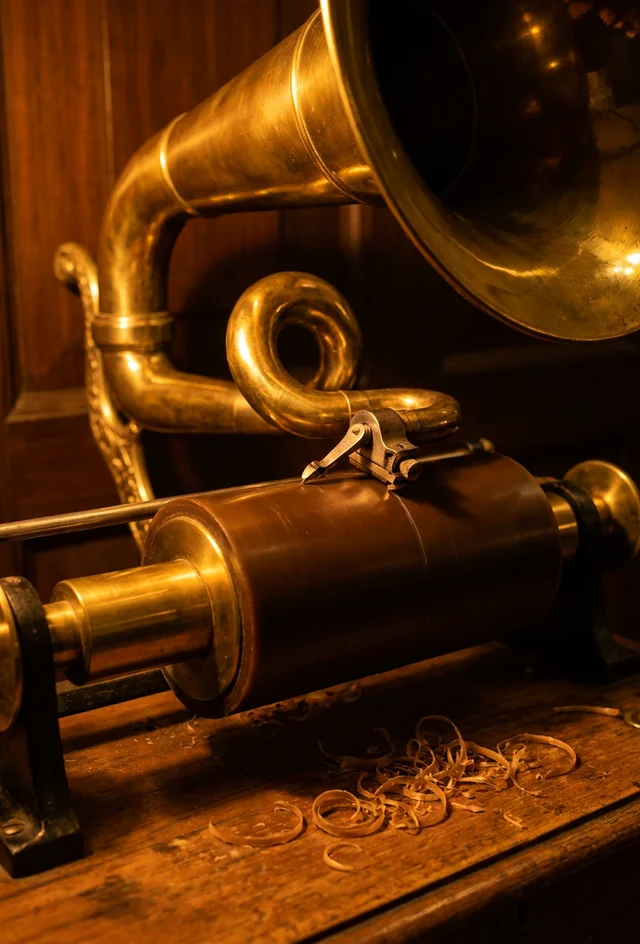
The room smells of Delkhosh perfume, because the studio is also the shop. Hemendra Mohan Bose — hair-oil king, cycle dealer, and the first Indian to manufacture gramophone records — sets the brass horn before his guests and asks them to speak. The guests: Rabindranath Tagore. Jagadish Chandra Bose. Prafulla Chandra Ray. The poet and the scientists of this library, their living voices cut into rotating wax by a man whose day job was perfume.
Nobody in the empire had asked what India sounded like. A shopkeeper decided the question mattered — and answered it on his own machines, under his own label: H. Bose’s Records, Swadeshi.
A godown near the Bombay docks, and a young man who until recently held a chair in mathematics is checking bales against a manifest. He had left the professorship for trade and a friend had cried out that it was a fall. It was not. It was reconnaissance. In a warehouse you learn the thing no lecture teaches: that a bale is worth whatever the man holding the tape says it is worth, and that in India the man holding the tape was never Indian.
He went to London that year with the first Indian commercial house to open there. Half a lifetime later he would apply the same instrument to an entire country’s accounts and arrive at twenty rupees a head. The audit of an empire began with someone learning to measure cotton properly.
No paper. No ink that would survive a search. No radio, and a guard who counted heads twice a day. And yet the camp knew things — who had been moved, what had been decided, which way the war was actually going — and knew them faster than the men who ran it.
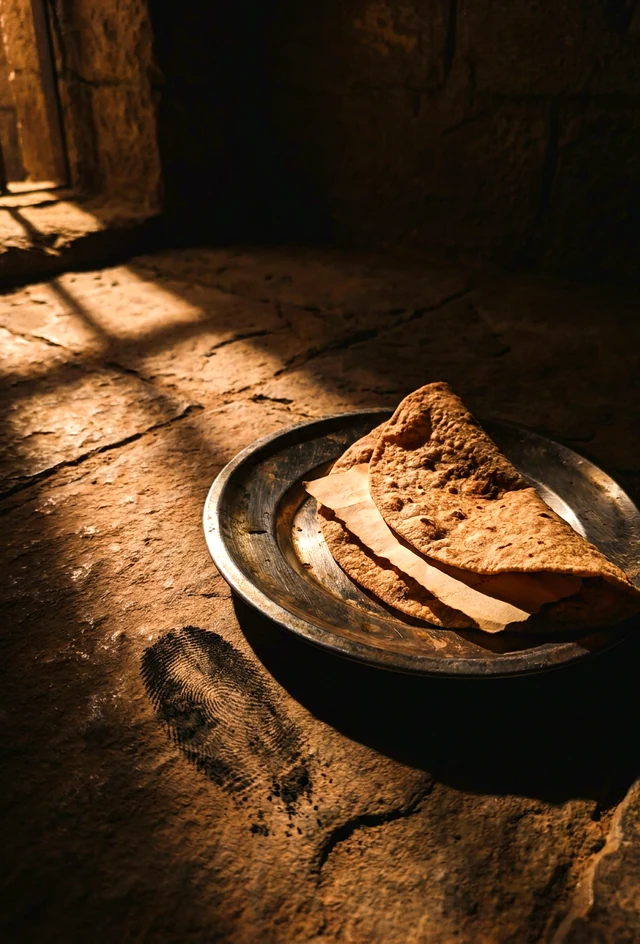
Men with nothing left will build a postal service out of dinner. A mark pressed into dough, a loaf that goes to the wrong hut on purpose, a ration party that takes a longer route. It is the oldest technology of the powerless and it is almost impossible to police, because to stop it you would have to stop feeding people. The practice is well attested across Indian POW camps in Southeast Asia; this account is composed from that pattern rather than from one named camp diary.
1956, and a Nobel committee expert writes an assessment: Bose’s work on quantum statistics is not so distinguished as work that had already won prizes. The statistics carry his name. The particles were named after him by Dirac. Half the matter in the universe is filed in his column.
Asked about never getting the prize, he said — as reported — I have got all the recognition I deserve. Read that twice, because it goes two ways. A man genuinely at peace. Or a man who worked out early that the scoreboard was never going to be kept in his favour, and decided not to spend a life staring at it. Either way he kept working, and that is the part worth taking. The quotation is carried by a tertiary source with no primary interview cited.
He came fourth in the Indian Civil Service examination and took the highest marks in English of anyone sitting it that year. It was the single most secure thing an Indian could hold in 1920 — salary, pension, standing, the whole machine behind you for life.
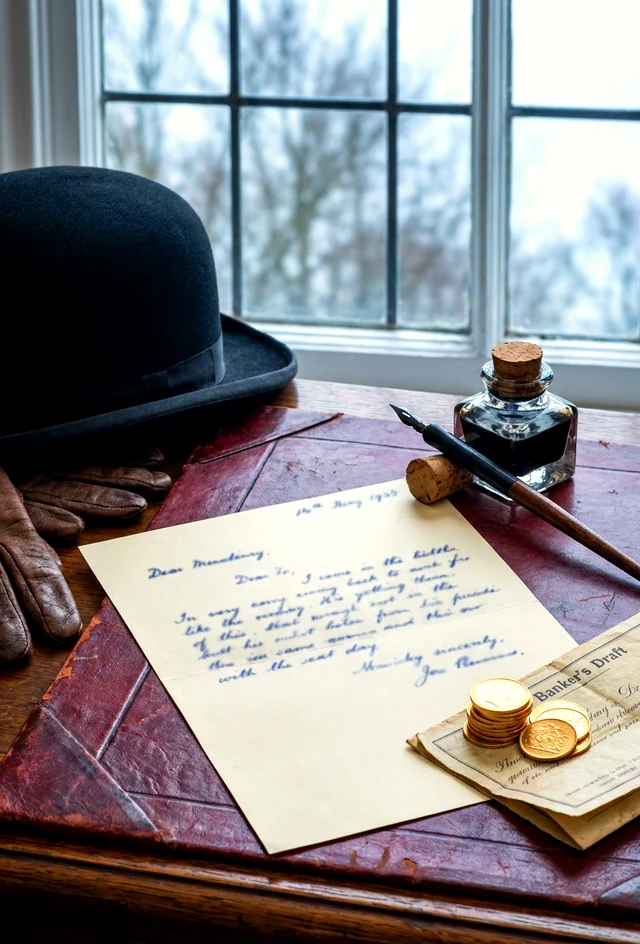
On 22 April 1921 he wrote to the Secretary of State asking to have his name removed from the list of probationers. And then he added the line that tells you how the man kept his books: I shall return the amount, one hundred and twenty pounds, as soon as my resignation is accepted. He is not storming out. He is settling up. Twenty-four years old, closing his account with an empire, correct to the last pound. Every canon has a renunciation scene and most are staged badly, all fire and no paperwork. This one lands because of the refund clause — the detail nobody would invent.
He was under a deportation order that had already expired when the Soma family hid him in the back of their Shinjuku bakery on 1 December 1915. He stayed about three and a half months. Being a wanted man with nothing useful to do, he cooked — Indian food, for the household, because it was the one thing he could contribute.
In 1927 the shop put a pure Indian-style curry rice on its menu. It is still there, and it is one of the most famous dishes in Tokyo, and almost nobody eating it knows they are eating the by-product of a failed British extradition request. Do not let the charm of that soften the rest: the protection came from the Japanese ultranationalist right, and the debt it created ran for thirty years.
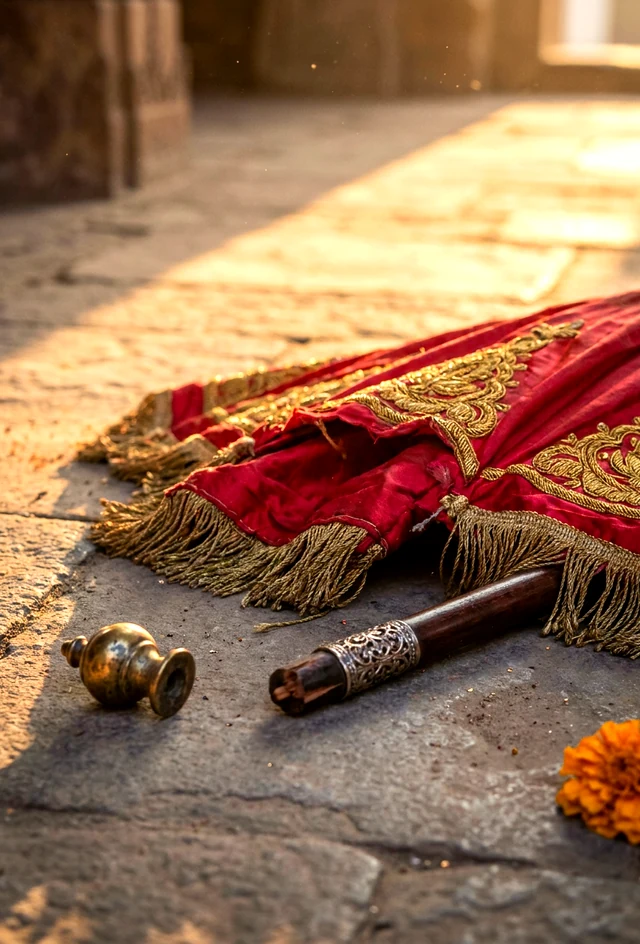
One person died when the bomb was thrown at the Viceroy in the Chandni Chowk. Not Hardinge, who survived with screws and gramophone needles in his back. The man standing behind him on the elephant, holding the state umbrella over his head. He was killed instantly and his body was left tangled in the ropes of the howdah.
He has no name. Not in the Viceroy’s memoir, which describes his death in detail. Not in the government’s own retrospective report on the conspiracy. Not in any account since, where he appears only as the umbrella-bearer. The most famous assassination attempt in modern Indian history killed exactly one man, and neither the empire nor the revolutionaries nor the historians thought to write down who he was. Somebody should try. The contemporary press of 24–31 December 1912 and the Viceroy’s household pension records are where it would be.
A young officer’s first year in a district, and the job is to work out what a field is worth so the state can tax it. Not in theory. In cane. You go out, you cut a measured plot, you count what comes off it, you weigh the jaggery, and the number you write down becomes somebody’s assessment for the next thirty years.
Twenty-nine stalks in a bundle on a camp table, and a man in his twenties trying to decide whether this year was typical. He has no way of knowing. The village knows, and has every reason not to tell him, and he knows that too. The whole apparatus of Indian land revenue — the surveys, the settlements, the codes, the courts — is built on top of a young man in a field making a judgement call he is not qualified to make. That is not a scandal. It is simply what governing at that scale actually consisted of, and it explains a great deal about what came out of it.
Every twenty years Parliament renewed the East India Company’s charter, and the terms on which a fifth of humanity lived were re-set in a committee room by men who had mostly never been there. In 1853 the renewal came round again, and this time there was a document on the table from India — a petition from the newly founded Bombay Association, itemised, signed, and addressed to the people who would actually vote.
It got almost nothing. The one thing the 1853 Act did concede was competitive examination for the civil service, which sounded like an opening and functioned, for the next forty years, as a wall. But the petition had established something the Act could not take back: that there existed, now, a written Indian account of Indian conditions, in the record, quotable. Everything afterwards escalates from a piece of paper that did not work.
Behnarmji Malabari had campaigned against child marriage for the better part of a decade and moved almost nothing. Then a case came to the Calcutta High Court in which a girl had died of injuries inflicted by a husband far older than her, and the law as it stood made her age the decisive question.
The trial did in a fortnight what the campaign had not done in ten years, because it put the thing in a law report where respectable people had to read it. Act X of 1891 followed, raising the age of consent from ten to twelve — two years, and one of the bitterest quarrels of the century. This library will not use the child as a device. Her death is in the record because a court had to decide something, and the record is the only reason the law changed at all. That is worth stating plainly and then leaving alone.
Two documents went out to the princely states in the summer of 1947 and only one of them is famous. The Instrument of Accession asked for three subjects — defence, external affairs, communications. The standstill agreement asked for nothing at all: it simply said that everything currently working would keep working while the rest was argued out. Trains, posts, telegraphs, customs, currency.
It sounds like housekeeping. It was the whole trick. A ruler weighing independence against accession was not being asked to decide under threat; he was being shown, in writing, exactly how much of his state’s daily functioning was somebody else’s to withdraw. Almost all of them signed both. One signed only the standstill, and spent the year discovering what the other document had been for.
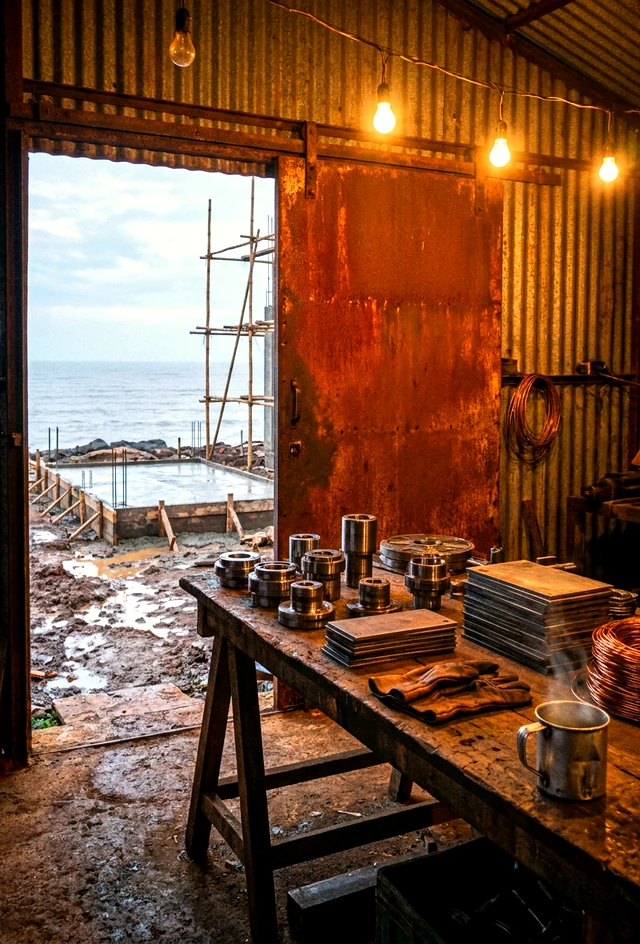
Before there was a reactor there was a headland, a foundation, bamboo scaffolding and a corrugated-iron shed with a trestle bench in it. That is how the Indian atomic energy establishment began — not with a laboratory but with a construction site and a small number of people who had been told to build something the country had never built.
Bhabha had made the argument in 1944, in a letter to the Tatas, before there was an Indian government to fund anything. The institute came in 1945, the commission in 1948, the establishment at Trombay in 1954, and the reactor went critical in August 1956 — the first in Asia outside the Soviet Union. Every stage of it was somebody working in a shed first. That is what the beginning of a capability actually looks like, and it looks like nothing.
Bibha Chowdhuri appears in most accounts as a co-author. She was on the Himalayan hillsides between 1939 and 1942 exposing photographic plates and reading the tracks under a microscope, and her name is on the Nature papers. Then the war cut off the supply of sensitive emulsions and the work stopped, and the story usually stops with it.
It should not. She went to Manchester and took her doctorate under Patrick Blackett — a Nobel laureate — on extensive air showers. She came home, spent eight years at the Tata Institute of Fundamental Research, later worked at the Saha Institute, and went on publishing. She died in 1991. By any honest count she was among the first women anywhere to do frontier particle physics, and she is filed in her own country as somebody’s collaborator. A co-credit is not a biography. This shelf is correcting the entry.