The contract, in writing.
Trust is the whole product. So here is the constitution we produce under — not as a promise, as a specification, with the parts that are enforced by a machine marked as such.
Primary sources first — named books, period reporting. When we lean on a number, we tell you whose number it is: ten famines in forty years is R.C. Dutt, Indian Famines: Their Causes and Prevention, 1901 — an ICS insider who ran famine relief himself, resigned when the service wouldn’t trust an Indian, and wrote the ledger the empire couldn’t refute. When we make a reading — the farm, the bull, the slaughterhouse — it is marked as a reading, declared openly, never smuggled in dressed as fact. No invented quotes. No dramatised dates. The century is dramatic enough; it doesn’t need our help.
We cover the years as they were reported at the time — time-lapse from 1858, no spoilers from the future. A man in 1905 does not know 1947 is coming, and in our pages, neither do you.
How a figure earns a tile in the Table: a course actually run — the soil, science, industry, capital, defence, the embassy, the kinetic arm; a verifiable arc with dates; and a handoff. This is a relay. A man with no baton passed is a biography, not an element.
Two kinds of picture, and the page always says which
This is the part most publications leave to the reader to work out, and we think that is the wrong call. Every image here is one of two things, and you are told which one, in the same place, every time.
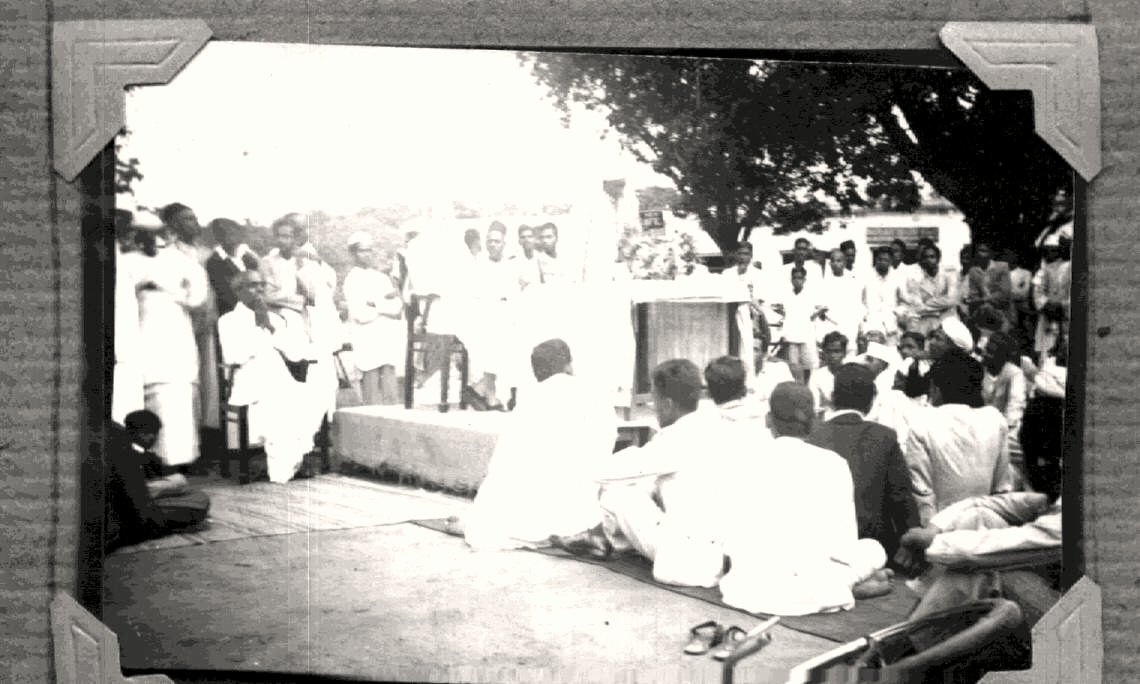
A document is something that survived — a photograph, an engraving, a printed page, a map. It carries a hairline rule along its top edge and a credit line under it naming who made it, what year, the licence it is published under, and a link straight back to the file so you can go and check us. It is never cropped to fit a layout, never colourised, never cleaned up. Choosing a crop is choosing what the evidence shows, and we would rather have an awkward column than a tidy lie.
A plate is a frame we made. It carries no credit line and no date, ever, because there is no photographer and there was no moment. Its caption tells you what it depicts and then stops. And the line that does not move: no synthesised face is published as a real person. Where a real face is needed, the document tier is the only route.
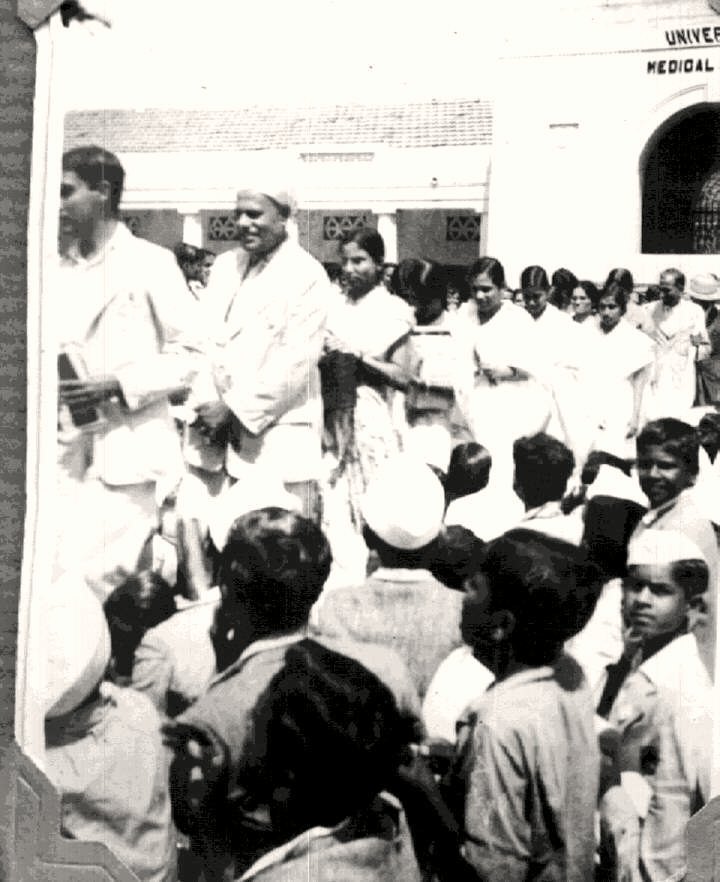
Even the dates get audited. The picture above came out of the archive with a date in the 2000s attached to it — which is when somebody put the print on a scanner, not when the students were standing outside that examination hall. Our build refuses to publish a file date that arrives later than the thing it shows; the year you see is authored, and hovering it will tell you where the dating came from. One image in this session was thrown out entirely on the same rule: it was catalogued as 1947, and its own description admitted it was a photograph of a museum screen playing old footage. Nobody would ever have noticed. That is exactly why the check is a machine and not a habit.
The portraits work on the same principle: graded means the archival original — the real face, from the record — toned warm so a century of photography can sit on one shelf. The face is never invented. The lamplight is ours; the man is history’s.
When we get it wrong
And we will; the century is wide and the record has holes. Catch us. Write to hello@boseboys.com and bring the source. Corrections go in the open, on the page. The Mortality Record publishes twenty-seven events it cannot yet put a number to, and the Collateral Damage publishes the claims it examined and refused, with the reason. A young archive that hides its gaps is telling you something about the parts you can see. Skeptics are not our problem. Skeptics are our hiring pool.
Cinema for the eye · real prose for the ear · sources for the spine.