On the twelfth of March, 1930, an old man in a loincloth walks out of his ashram with a wooden staff and turns toward the sea. It takes him twenty-four days and two hundred and forty miles. At the end, on the beach at Dandi, he bends down and picks up a handful of natural salt left by the tide — and breaks the law of the British Empire with his fingers. It is the most theatrical act in the history of the freedom struggle, and it works because every single person who hears about it understands it in an instant.
Look at the genius of the choice. The empire taxed salt — the one substance no human being, rich or poor, hill or coast, Hindu or Muslim, can live without. To boil your own from the sea was a crime. By picking salt, Gandhi reached past every division in a vast and divided country and put his finger on the one grievance that belonged to all of it at once. Within weeks the gesture is repeated on every coast; civil disobedience erupts from one end of India to the other.
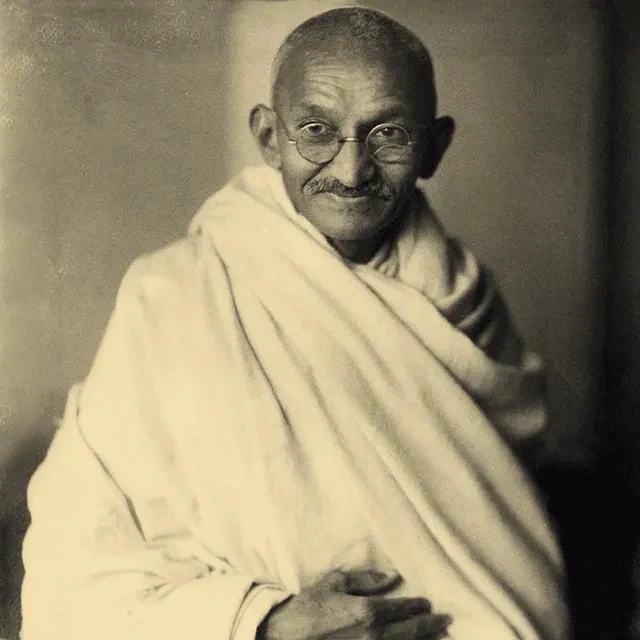
Tens of thousands go to jail, Jawaharlal Nehru among them. Women step into the front rank in numbers the movement has never seen. And the world's newspapers carry, day after day, the same impossible image: the greatest empire on earth arresting an unarmed old man for the crime of picking up salt. The political victory can be denied for now. The moral one is already total.
He had not fired a shot or won a vote. He had simply found the one thing everyone shared, walked to the sea, and bent down — and made an empire look, in front of the whole watching world, exactly as small as it was.