Picture a boy walking to school in the dark, doing his arithmetic by the light of the streetlamps because there is no oil for a lamp at home. He will grow up to become the most powerful Bengali of his century without ever once holding office or command. They will call him Vidyasagar — the ocean of knowledge — and the title will turn out to be an understatement.
What he does with that ocean is not what you'd expect from a scholar. He reforms the Bengali alphabet itself — writes the primer, Barnaparichay, that Bengal still learns its letters from a century and a half later. He hands a whole people an easier door into their own language. But that is the gentle part of the work.
The hard part is the widows. He decides that a Hindu widow should be allowed to marry again, and he sets out to change the law of the land to permit it. The orthodox file a counter-petition carrying nearly four times his signatures. He wins anyway. And then — because a law that no one obeys is just paper — he presides over the first such marriage himself, in Calcutta, and pays for it out of his own pocket. Years later he marries his own son to a widow, to leave no one any room to say he didn't mean it.
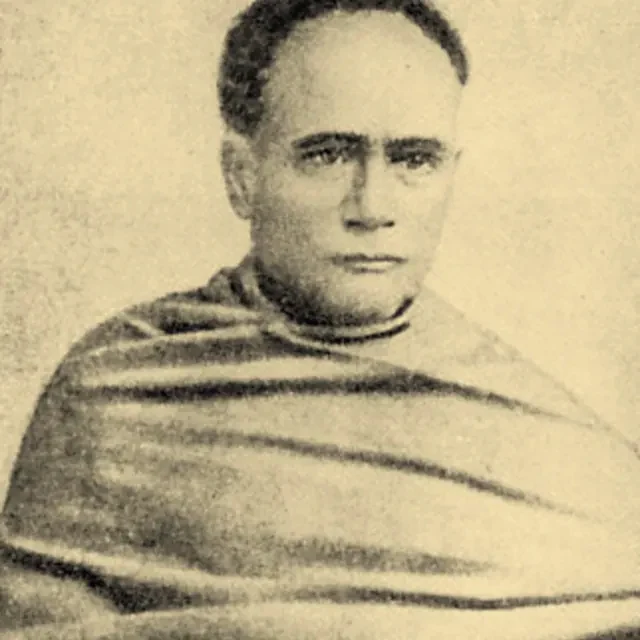
He turned his own family into the proof of his own argument. That is not a scholar. That is a man at war with a closed door.
He runs something like thirty-five schools for girls, at his own expense, until the expense ruins him; he opens Sanskrit College, the holy of holies, to boys who were never meant to be let inside it. Read it as charity and you miss the whole strategy. He is not building scholars. He is widening the intake — forcing open the question of who is even allowed to become great, in a country whose every custom was arranged to keep that number small.

Here is why he belongs in this story and not just in a textbook. A talent farm is worthless if the seed is rationed by birth. You can build the finest laboratory in Asia and it means nothing if the boy who would have filled it was turned away at the gate as a child. Sircar is building the house. Vidyasagar is making sure more kinds of people are allowed to walk into it. They called him Daya-r Sagar too — the ocean of kindness — and he gave away so much of himself that he died in debt.
He never built a single instrument or proved a single law. He did something the men who did could not have done without him — he opened the gate, and then stood in it, so it could never quite be shut again.