The most respected doctor in Calcutta stands up in front of his own profession and recants. He tells them, in so many words, that the medicine he built his name on is half-blind, and that he is switching to the thing they all call quackery. He is not drunk and he is not finished. He is, by the city's reckoning, committing professional suicide on purpose. His name is Mahendralal Sircar, and the year is 1867.
Back up, because the recantation only lands if you know what he was throwing away. He started with nothing — an orphan taken in by relatives, a free seat at Hare School because the family couldn't pay, Bengali before English. From there he climbed all the way to the second Indian ever to take the M.D. from Calcutta University. He had done the impossible thing: a poor Bengali boy had become an unimpeachable man of Western medicine. And then he stood up and said it wasn't enough.
He converts to homeopathy — the discipline he had himself mocked, on the record, calling its practitioners leeches. The establishment hits back fast and hard; a missionary doctor books the Medical College theatre just to deliver a lecture aimed at demolishing him by name. Sircar takes it. Because the conversion was never really the heresy. It was only the loud part.
The quiet heresy was the idea underneath it — that an Indian should not spend his life merely receiving the science Europe deigns to send.
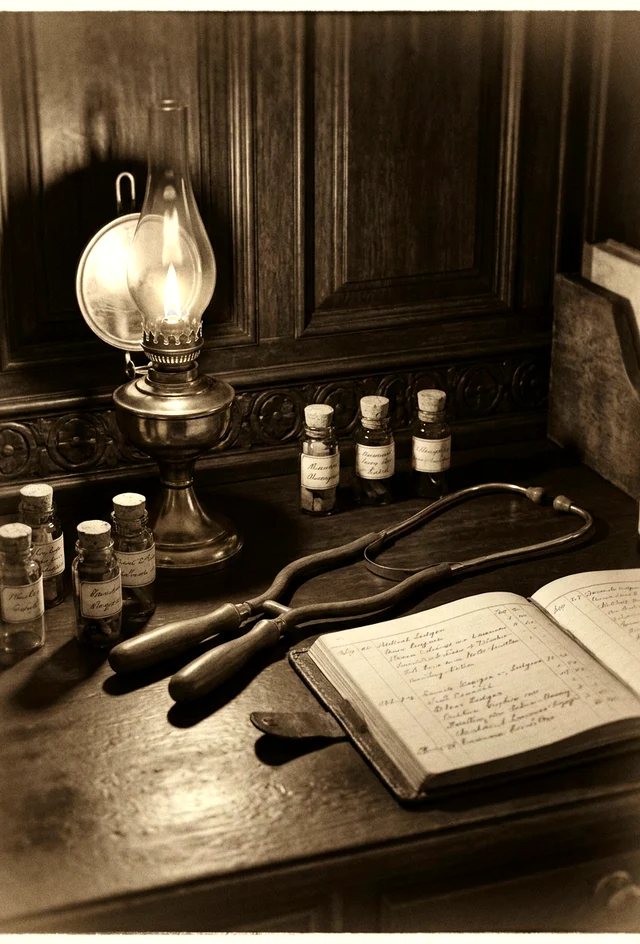
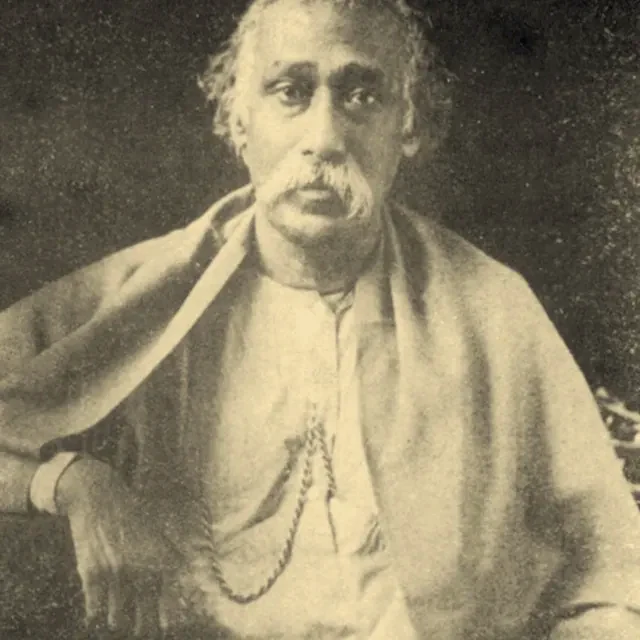
He starts a journal and uses its pages to argue, year after year, for a thing that does not exist anywhere in Asia: a scientific research institution that Indians own, fund, and run — to make knowledge here, not import it. People think he is dreaming. He keeps writing. And in 1876 he does it: the Indian Association for the Cultivation of Science, in a rented house on Bowbazar Street, paid for by public subscription, not a rupee of government or foreign money. Solely native. Purely national. He runs its lectures himself, a hundred of them, three hundred people a night, until the city takes to calling it the Private College of Science.
He dies in 1904 convinced he has failed. The money for the advanced chairs he wanted never came; he says so himself, at the end, counting what he couldn't build. He does not know what is coming. Twenty-six years later, in the rooms he raised on Bowbazar Street, a man named Raman will find the reason the sea is blue and carry it to Stockholm — India's first science Nobel, won inside the heretic's house. Sircar was right the whole time. He just had the bad luck to be right too early to see it.
He spent his name to ask one question — why must we only receive? — and never learned that the question had already started answering itself, in his own rooms, in his own city, just after he was gone.