Trends & Life.
Not events — weather. The slow pressures that decided what an ordinary life could be, decade after decade, as the papers of the day reported them.
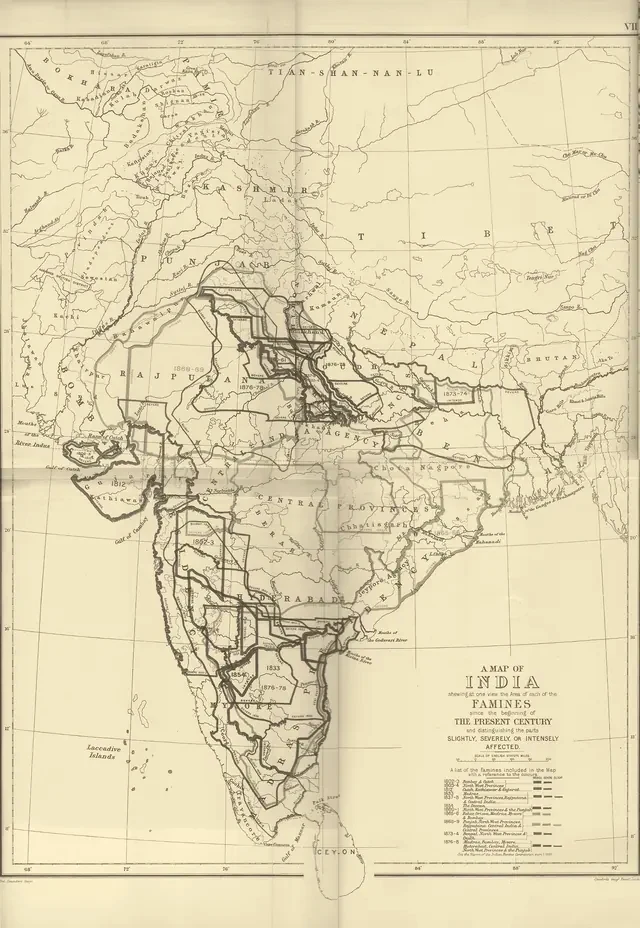
A famine every four years
Ten famines in forty years — that is the drumbeat under every other story on this site. Not freak weather: a system. When the land tax was light and settled, drought passed without a death. When it was heavy and ever-enhanced, the same drought killed five million. An ordinary family’s life expectancy was set less by the monsoon than by the revenue table.
See the table →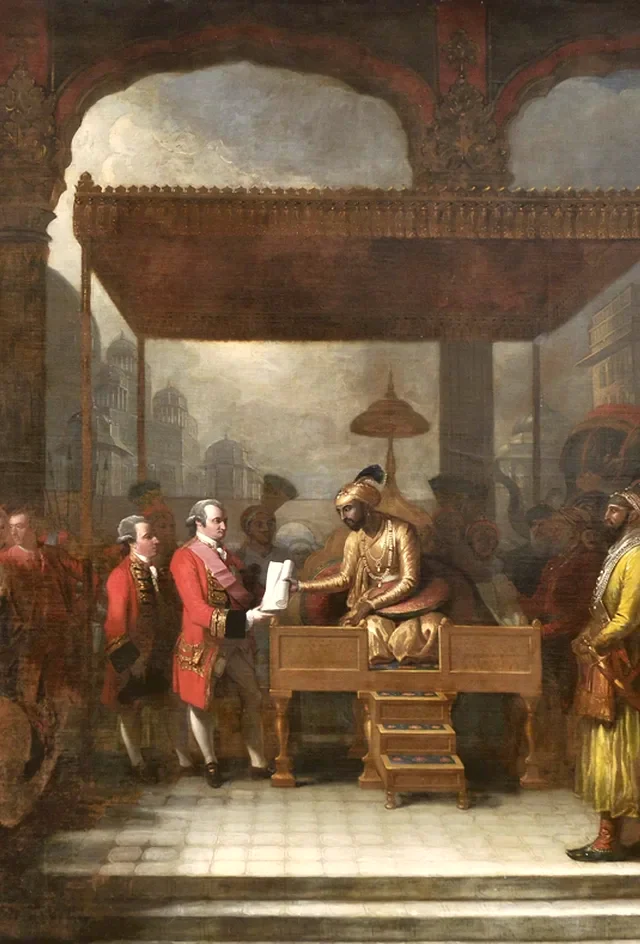
Half the revenue leaves the country
Roughly half of India’s net revenues left India annually — Dutt called it a drain unexampled in any country on earth. What it meant at street level: no capital for an instrument industry, no fund for a science institute, no cushion when prices crashed. Every builder in this library built against this current.
The drain in numbers →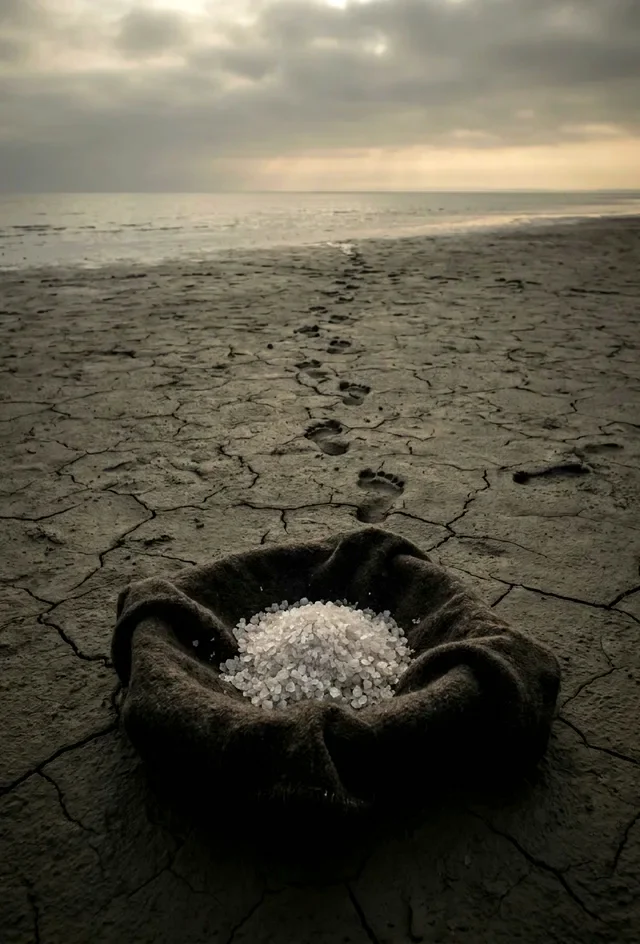
Selling the family gold to pay a fixed tax
World prices halve. The revenue demand does not. So the peasant sells the household ornaments — 1,600 ounces of distress gold a day out of Bombay — to pay a tax on income that no longer exists. The 1876 knife, twisted by a global crash.
The Distress Gold →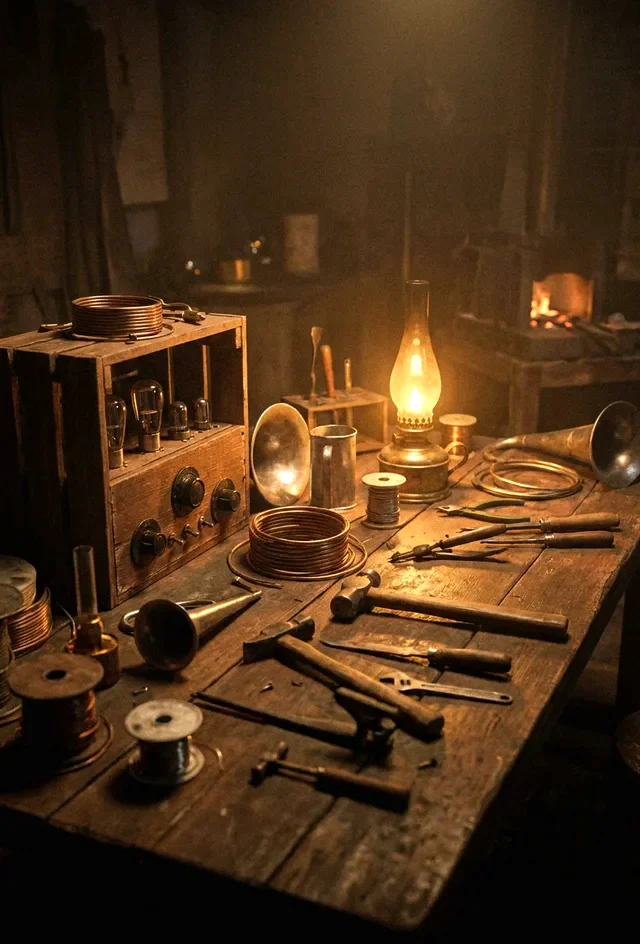
A country arranged to consume
No instrument industry, by design: India buys finished things, sends back raw ones. A scientist in a colony is supposed to be a grateful consumer of apparatus. Which is why a physicist teaching a tinsmith to build a wave receiver is not a charming anecdote — it’s an act of economic rebellion, one workshop at a time.
The Tinsmith story →
The farm keeps cropping
Against all four curves above, one trend runs the other way: the talent farm. 1876, gates open. 1896, a peer at Faraday’s bench. 1917, an institute gifted to the nation. 1928, the sea answers. 1930, Stockholm. The curve nobody funded is the one that held.
Watch the relay →