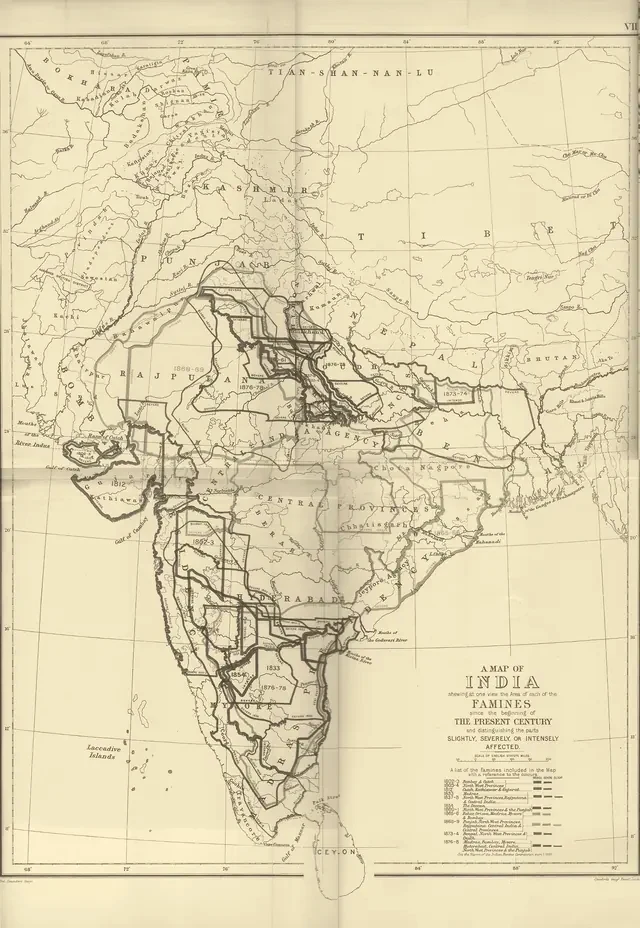
While the marchers fight the empire they can see, a second enemy walks in that no satyagraha can touch — a number falling on an exchange floor an ocean away. The Great Depression reaches India, and the price of everything a farmer grows collapses. The agricultural index drops from two hundred and three to one hundred and twenty-seven in two years; wheat and jute lose more than half their value. And the one figure the Crown will not allow to fall is the land revenue. The income vanishes. The tax stays exactly where it was.
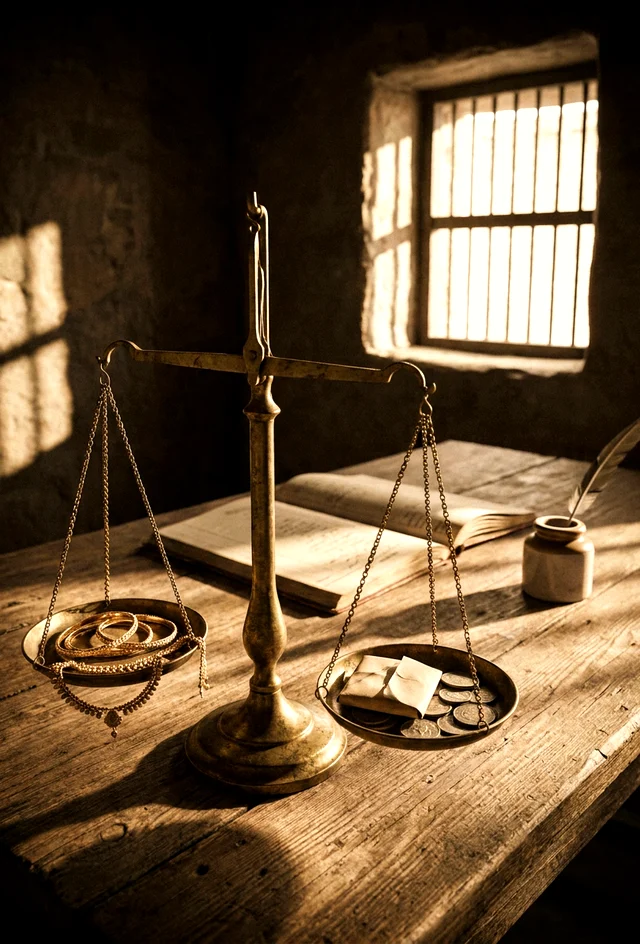
So the peasant does the last thing left to do. He sells the gold — the wife's bangles, the daughter's dowry, the only wealth a poor family ever holds — and melts it down to pay a tax on land that no longer feeds him. Roughly sixteen hundred ounces a day flow into the port of Bombay and out to London, the British economy quietly propped up on the dissolved savings of the Indian poor. It is the exact knife the founders saw in 1858 — a fixed demand on a people who cannot save — and a global crash is leaning on it with its whole weight.
Here a chemist had written the prescription thirty years before anyone fell ill.
P.C. Ray, in his own book, had already named the disease: Bengal de-industrialized, reduced to a quarry, its commerce conquered, its energies spent on misdirected charity. His cure was never a slogan — it was a factory. Industry over institute. You do not stop the drain by marching against it; you stop it the day you can make what you used to be forced to buy. The distress gold flowing out of Bombay was the precise, golden measure of how right he had been, and how long no one had listened.
There were two ways to read 1931. One counted the prisoners freed by a famous handshake. The other counted the bangles melted down in ten thousand villages to pay a tax on starvation — and asked, quietly, which number the freedom everyone was marching for was actually going to fix.