Every account of the salary protest tells you the heroic part — the man who would not draw a wrong wage for three years. Almost none of them tell you the part without which the heroism is just a man starving on principle. Somebody ran that household through those three years. Somebody made the refusal affordable. Her name is Abala Bose, and she is not a footnote to the story; she is the base the whole sacrifice stands on.
She had wanted to be a doctor. Calcutta Medical College would not admit her because she was a woman, so she went to Madras to study medicine, and ill-health stopped her before she could finish. A lesser version of the story ends there, in disappointment. Hers doesn't.
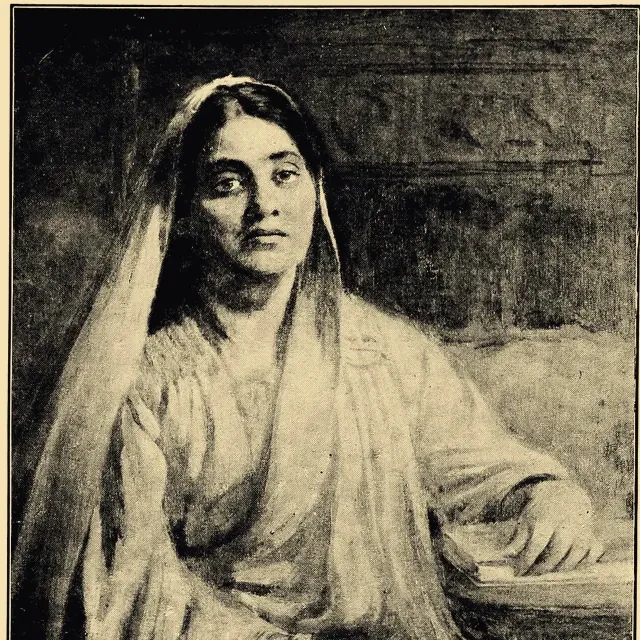
She builds. Across her life she raises a parallel farm to the one her husband and his friends are tending — but for the half of the country no one was farming at all. She runs a girls' school, founds the Nari Shiksha Samiti, and opens Vidyasagar Bani Bhavan, Bengal's first teacher-training institute, which doubles as a refuge that takes in widows and turns them into teachers, who then go and staff the schools she keeps opening. It is a self-replicating engine of exactly the kind the men are building — and she builds it for women, from scratch, against a society that counted neither women nor wives as builders.
She is the farm that fed the farm — and the proof that the talent farm was never meant to be closed to half its talent by accident.

Behind the man who said no to a number stood a woman who said yes to a hundred institutions — and made sure that when the doors of Indian science finally opened, there would already be women standing ready to walk through them.