In 1895, a chemistry professor in Calcutta isolates a compound — a stable mercurous nitrite — that the textbooks said could not be made to sit still. The letters come in from the great names of European chemistry, Berthelot and Roscoe among them, congratulating a Bengali they have never met. He earns a nickname, Master of Nitrites, and somewhere over a hundred papers. By every rule of the colonial academy, Prafulla Chandra Ray has arrived. He could have spent the rest of his life there, on the safe high ground of pure research, admired.
Instead he looks around at his country and notices the thing the empire has worked hardest to arrange: India makes nothing. It digs the raw material out of the ground, ships it to Britain, and buys it back as finished goods at a markup. A colony is a quarry with a customer attached. And a discovery, in a quarry, is just a curiosity — unless someone turns it into a going concern.
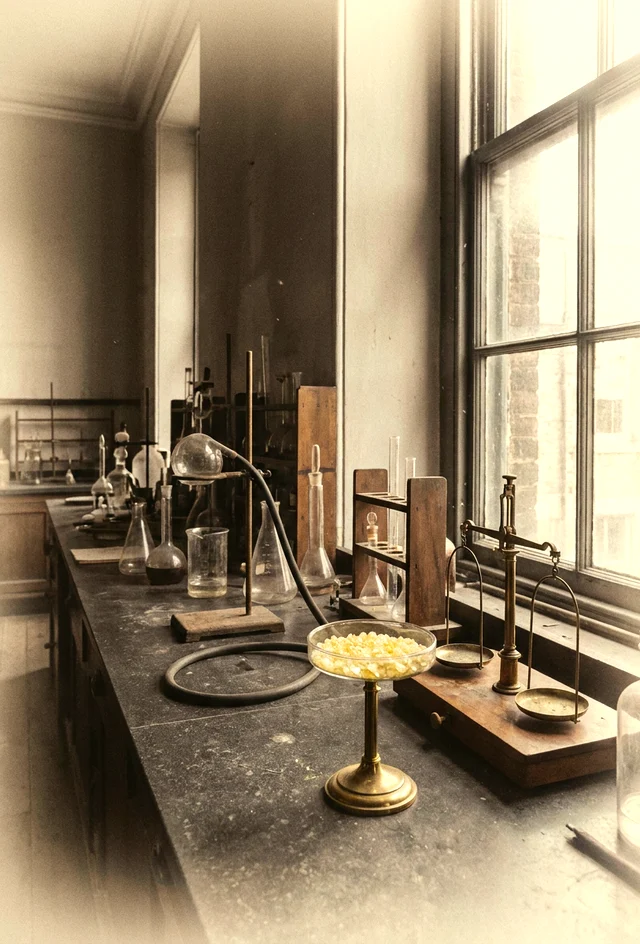
So the Master of Nitrites becomes a shopkeeper.
With seven hundred rupees and the back room of his own house, he starts mixing and bottling. The little operation becomes Bengal Chemical — and then, by 1901, India's first pharmaceutical company. He builds it for a reason he says out loud: to make work for unemployed Indian youth, and to prove, against a hundred years of policy designed to make it impossible, that Indians can manufacture. He is, as one description has it, a revolutionary in the garb of a scientist.
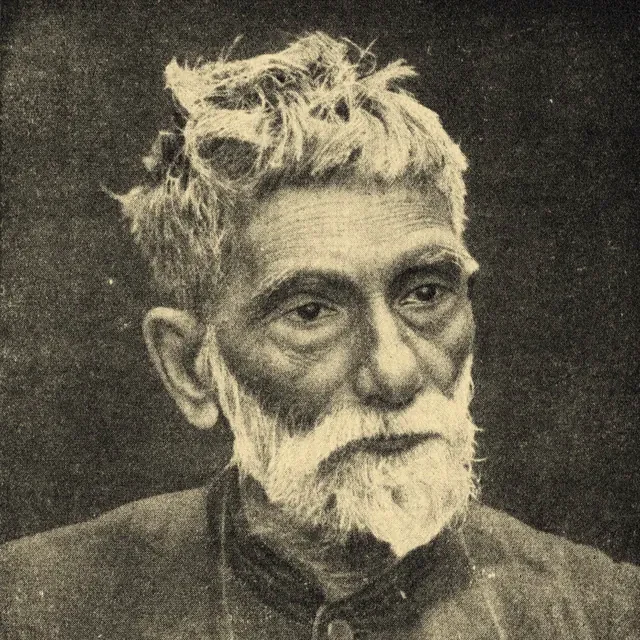
He writes a history of Hindu chemistry to remind a colonized people that they had a science before they were taught to feel they had none. He campaigns, all his life, for teaching in the mother tongue. And on his sixtieth year, in 1921, he does the thing that keeps happening in this story — he gives his entire salary away to the university for research, and lives on almost nothing. The same gesture J.C. Bose made by refusing the wage; the same gesture the founders made building IACS on borrowed faith. The cost is the point. None of them are in it for the trophy.
He proved the law the whole show is built on, in a back room with seven hundred rupees: a paper convinces them once, and is forgotten; but a factory stands, and hires, and makes — and a country that can make cannot be kept a quarry forever.