
A lamp is still burning in the magistrate's house long after the rest of the district has gone dark, because a son was born tonight, and Bhagawan Chandra Bose has no intention of sleeping.
He has spent the day being the government in a place the government rarely bothers to visit. Deputy magistrate — the brown hand at the bottom of the Englishman's order, which is a more complicated thing to be than either the English or the villagers think. People walk half a day to stand at his table with their disputes and their petitions and their small, losing arguments with the revenue, and he hears them out, and then he stamps what the order tells him to stamp.
This was the year the order changed its letterhead. After the burning of 1857, and the long row of hangings that came after it, the Company that had run the country like a trading floor for a hundred years was wound up, and the Crown took its place, and the Queen's men read out a proclamation promising her new Indian subjects the care of a mother. Bhagawan had to read it aloud himself, in his own district, to people who had not eaten well in years. He read it the way you read a thing you will later be made to enforce.
And now there is this boy.
A man in his position is supposed to know exactly what to want for a son. The open doors. The English school, the clean English, the straight path to a clerkship or the bar — and, if the boy turns out bright and his manners pale enough, perhaps a junior chair inside the administration itself: a brown man trusted to help work the machine that works his own people. That is the prize the whole arrangement holds out to fathers like him. Raise him well, and he can grow up to be useful to them.
Sometime in those weeks the two friends who would understand come to see the child, and to argue, because arguing is what they do.
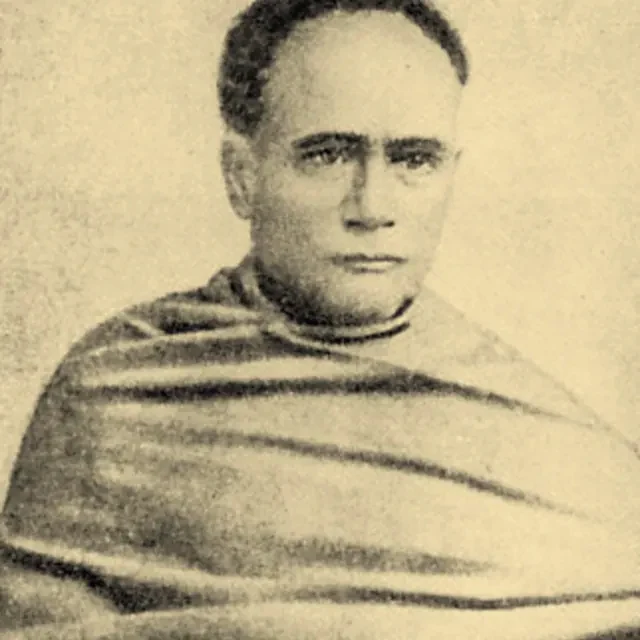
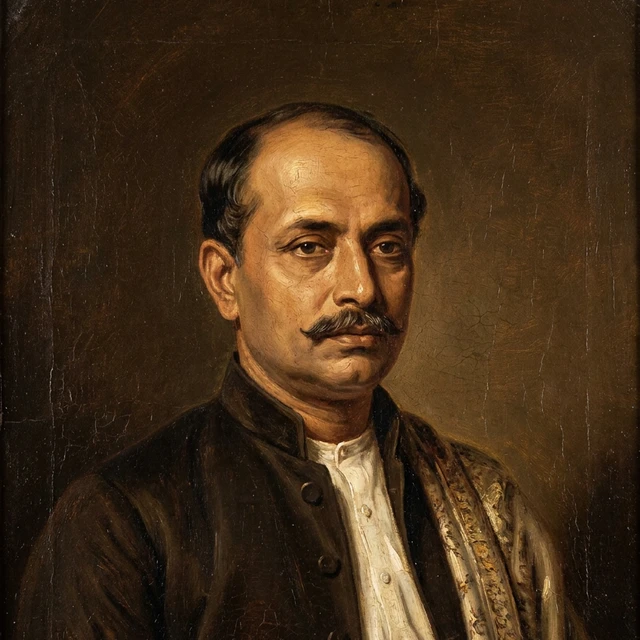
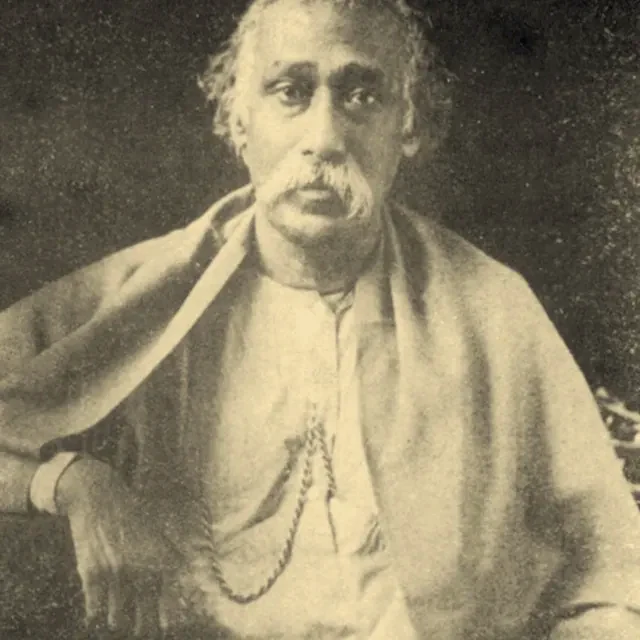
Vidyasagar is the most respected man any of them know, and quietly one of the most tired, because he has spent twenty years prying small mercies out of the system an inch at a time and paying for every inch out of his own pocket. He got the law changed so a widow could marry again, then watched the devout turn their backs on him, then married his own son to a widow to prove he had meant it, and ran his schools for girls straight into personal debt. He has no speeches left about freedom. He talks instead about what one stubborn man can loosen before the machine closes again on his fingers.
And there is young Mahendralal, years yet from his own medical degree and already unable to finish a sentence about science without it turning into a sentence about pride — that an Indian should not spend his whole life merely receiving whatever knowledge Europe troubles to send him, by rote, grateful; that he ought to make some of it himself, here, in his own city, with his own hands, and make the world come to Calcutta to look.
None of them, that night or for years after, has a plan.
People forget this about founders. At the start they are mostly just men who can see the problem far more clearly than they can see the way out of it.
What Bhagawan has is not a plan but an instinct, and he acts on it. When the boy is old enough, he does not send him to the English school his rank entitles him to. He sends him down the road to the ordinary village school, and sits him on the earthen floor to learn his letters in his mother tongue, between the son of his own Muslim attendant and the son of a fisherman, among the people he comes from — before he learns a single syllable of the language of the men who govern them.
The reasoning is plain enough. A child who knows his own people in his bones is a much harder thing, later, to turn into a tool against them. Put the root down first. The polish can come after — the polish always comes — but the root is the one thing you cannot go back and add to a grown man who was raised without it.
That is the founding, if you want a date for it. Not a society, not a seal, not a building — a father deciding what his son's first floor will be made of. The men who will one day raise the laboratories and the colleges are infants that night, or not born yet; the institutions are twenty and thirty years off. Bhagawan knows, the way you know it with a newborn going heavy in your arms, that he has just made himself answerable for a stretch of time that runs well past his own, and that he will not be there to see how most of it turns out.
He was never going to be planting for himself.
So he leaves the lamp burning, and holds the boy, and begins.