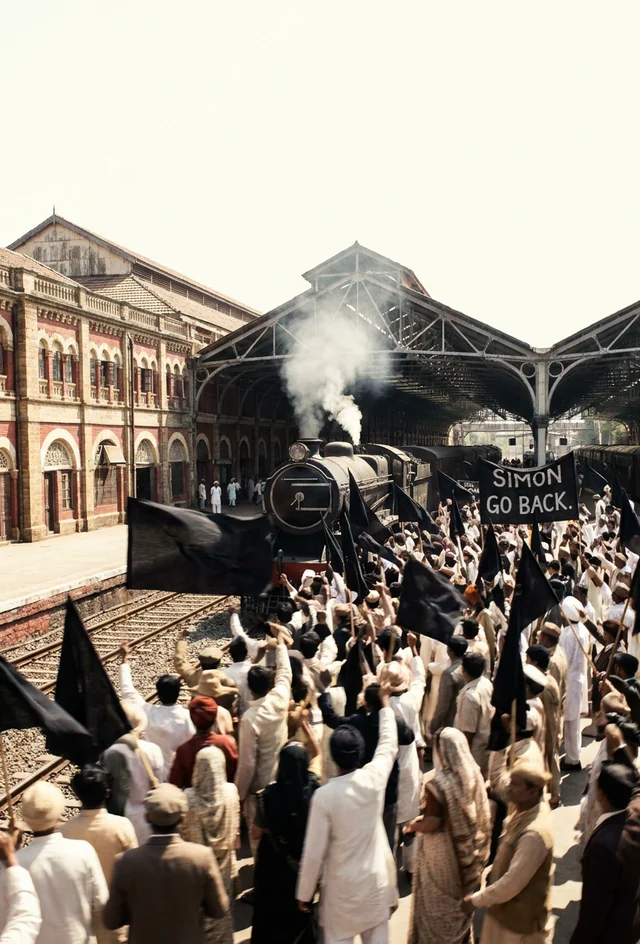
In 1927 the empire sets up a commission to redraw the constitution of India, and staffs it with seven Englishmen and not one Indian. Three hundred million people, and in London's reckoning not a single one is fit to help decide their own future. The men who draft it think they are doing routine administration. What they have actually done is hand the country the one thing no Congress resolution could ever manufacture: a single, unanimous, white-hot insult.
The arrogance unites a quarrelling country overnight. Moderate and extremist, Hindu and Muslim, men who agreed on nothing now agree on this. Everywhere the Simon Commission's train pulls in, it pulls into a wall of black flags and one chant rolling down the platform in a dozen languages at once — Simon, go back.
Underneath the constitutional insult was the older wound — the one the founders had seen on the killing floor in 1876.
The pledge the country will take two years from now names it plainly: the fourfold ruin of India under British rule — economic, political, cultural, spiritual. The Simon Commission is only the lid finally rattling on a pot that has been boiling since the first engineered famine. The men on that train do not yet understand that, station by station, into wall after wall of black, they are writing the first line of the end.
They came to measure whether Indians were ready to govern themselves, and got their answer on the platform — a country so ready it would no longer even discuss the question. Within two years the demand would stop being reform. It would become everything.