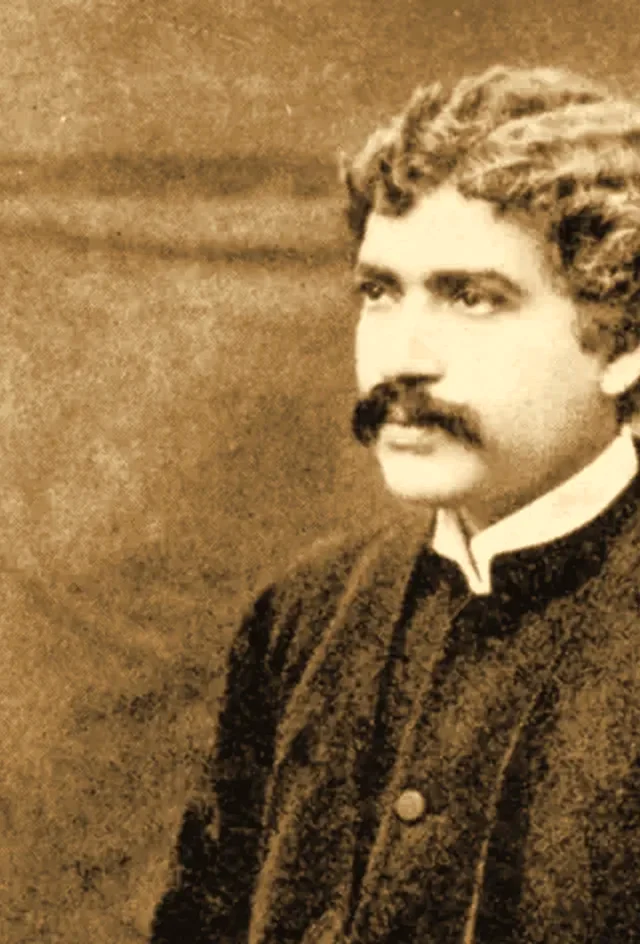
On the thirtieth of November, 1917, Jagadish Chandra Bose does something with the work of his life that the men who price everything can never quite understand. He gives it away. He founds the Bose Institute in Calcutta, pours his honours and his savings into it, and then hands it to the nation — and he is careful about the word he uses for it. Not a laboratory. A temple.
The distinction is the whole point of his life, compressed into a building. A laboratory is a place you work. A temple is a place you give yourself to something larger and walk out smaller and more useful. He has spent decades refusing to own the knowledge he made — refusing the salary, letting the patent die — and now he refuses to own even the institution. The crop has become a permanent farm, and he has made sure that no single man, himself included, can ever pocket it.
Look at the pattern the track has drawn, because it is not an accident. The founders raised IACS on public coins and kept none of it. Bose refused his wage. Ray gave away his salary and built a factory to employ the young. Abala turned a household into a chain of schools. And now Bose takes the very institute that bears his name and signs it over to a country that is not even free yet. Every one of them, handed the chance to own a piece of it, chose instead to make it un-ownable — to turn it into a thing that would keep running long after they were gone.
And it did keep running.
Bose works on, out at Giridih, until he stops at the bench in 1937 — never retired, just finished mid-sentence. But the temple he raised does not stop with him. It is still there. The current he switched on as a boy walking toward IACS in 1876 has now been wired into a permanent institution that will outlive every name in this track — which was always the plan.
He spent a life proving that the most powerful thing a builder can do is make the thing he built impossible to own — and then he proved it one last time, with his own name on the door, and gave it to a nation that hadn't yet been born.